

Is the WiFi router in your bedroom affecting your sleep?
Three years ago I had tinnitus my doctor couldn't explain. An EMF meter and some furniture rearrangement changed things. Here's what I learned, what the research actually says, and the one free change most people can make tonight.
My name is Yarden. I started BioHarmonize™ with my wife Jessica after three years of living with a high, thin ringing in my left ear that no test could account for. My sleep was fragmented. My concentration was off. I felt vaguely depleted in a way that a good night's rest didn't seem to fix.
What changed things was a hunch and a piece of equipment I ordered online. I bought an EMF meter, walked through our Santa Monica apartment with it, and found two significant sources of radiofrequency radiation right outside our building: a cluster of power lines, and a bank of newly installed smart meters transmitting usage data wirelessly, around the clock. I had no idea they were there. Most people don't.
I started making changes. Over time, the ringing grew quieter. My sleep improved. I felt clearer. I want to be honest about this: the tinnitus hasn't gone away completely. I still live with it to some degree, and I probably always will. But it improved enough, gradually enough, that I knew something real had shifted - and that sent me further down the path. Three years of independent research later, Jessica and I built BioHarmonize™. This post is where I share what I learned, starting from the beginning.
What are EMFs, and which ones matter?
EMF stands for electromagnetic field. It's a broad term covering a wide spectrum of frequencies, from the extremely low frequencies (ELF) produced by household wiring and power lines, to the radiofrequency (RF) waves produced by WiFi routers, cell phones, Bluetooth devices, and smart meters.
The distinction between these categories matters. Non-ionizing radiation, which includes WiFi and RF signals, does not carry enough energy to break chemical bonds or remove electrons from atoms. This is frequently cited as evidence that it's biologically harmless. But non-ionizing does not mean non-interactive. Biological tissue responds to electromagnetic fields in ways that don't require ionization, and this is where the science gets more nuanced than the simple "safe vs. dangerous" framing suggests.
The most relevant frequencies for most people's daily lives are RF fields from WiFi routers, smartphones, smart meters, and Bluetooth, plus ELF magnetic fields from wiring and appliances. Both types are present in virtually every modern home, often at highest concentrations in the bedroom.
What does the research actually say?
In 2011, the International Agency for Research on Cancer (IARC), the cancer research arm of the World Health Organization, classified radiofrequency electromagnetic fields as Group 2B: a "possible carcinogen." This is the same category as coffee, aloe vera extract, and pickled vegetables. It is not a finding of harm. It is a finding that the existing evidence warrants further investigation, and that precaution is reasonable in the meantime.
More relevant to everyday health are the findings on non-thermal biological effects: responses that occur at exposure levels well below what would heat tissue. These include:
- Melatonin suppression. Multiple peer-reviewed studies have found associations between RF and ELF exposure and reduced melatonin production. A study published in Epidemiology (Schuz et al., 2001) found lower urinary melatonin metabolites in adults with higher residential ELF magnetic field exposure. Melatonin is not only a sleep hormone. It is one of the body's primary antioxidants and plays a role in immune regulation.
- Calcium ion channel activity. Research by Dr. Martin Pall, published in the Journal of Cellular and Molecular Medicine (2013), proposed a mechanism by which RF fields activate voltage-gated calcium channels in cells, triggering downstream biological effects. This mechanism has been cited in subsequent research as a plausible explanation for non-thermal effects.
- Oxidative stress markers. Several studies have found elevated markers of oxidative stress in subjects with higher EMF exposure. The BioInitiative Report, a review of over 1,800 studies compiled by independent researchers in 2007 and updated in 2012, identified oxidative stress as one of the most consistent findings across the EMF literature.
It is important to say clearly: none of this proves causation. The EMF research landscape is genuinely unsettled, with conflicting findings and ongoing methodological debates. What it does suggest is that the scientific conversation is more open than the mainstream "it's completely safe" position implies, and that the FCC's current exposure guidelines, set in 1996 and based solely on thermal effects, do not account for the non-thermal research that has accumulated in the decades since.
Why the bedroom matters most
Your body spends 7 to 9 hours in your bedroom in a state of relative stillness. During that window, the autonomic nervous system shifts toward its parasympathetic mode, hormones reset, the immune system consolidates, and cells carry out repair processes that can't happen efficiently during waking hours. It's the most biologically productive period of the day, and it happens in the room where most people's EMF exposure is also at its highest sustained level.
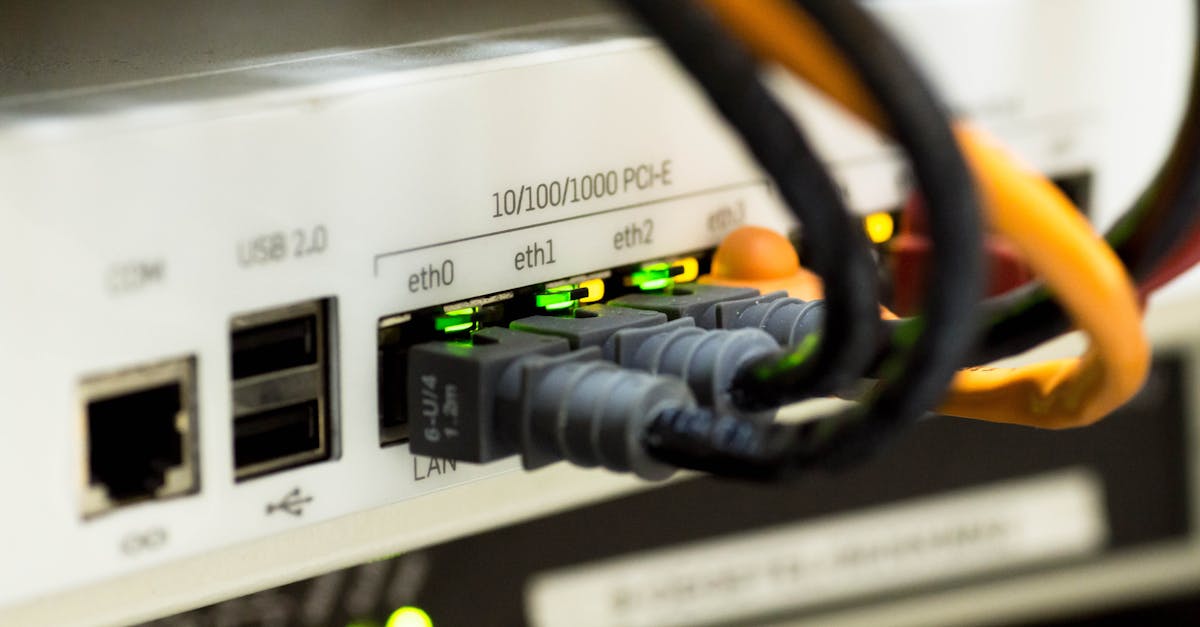
A WiFi router close to where you sleep produces RF radiation continuously. A smart meter on the bedroom wall pulses dozens to hundreds of times per hour. A phone charging nearby is transmitting and receiving data throughout the night. None of this is intended to alarm you. The point is: if you're going to do anything about your electromagnetic environment, the bedroom is the highest-leverage place to start, and the changes there are mostly free.
The one thing: move the router out of the bedroom
Moving your WiFi router out of the bedroom is free. That's the starting point.
If your router is in another room, you're already done. If it's in the bedroom because that's where the cable comes in, or because it's always been there and you've never thought about it, the practical solution is a timer plug that cuts power at midnight and restores it in the morning. It costs about $12. You configure it once. After that, it happens automatically every night.
When we measured the RF levels in our bedroom with the router running versus with it off, the difference was significant. The body is in that room for a third of your life. It's a reasonable place to reduce the ambient RF load, and it costs nothing but a small amount of inconvenience.
Other free changes worth considering: phone on airplane mode or in another room at night, smart speaker moved out of the bedroom, electric blanket unplugged after preheating rather than left on during sleep.

What this space is for
This blog, Field Notes, is where Jessica and I write about what we're learning. Not as a sales channel, not as a fear campaign. As people who came to this subject because we needed to, who spent years in the research, and who built a product line because we couldn't find anything that met the standard we wanted to buy from.
We'll mention BioHarmonize™ products when they're genuinely relevant. Most of the time, we just want the information to exist somewhere calm and honest.
If you want to go deeper: The EMF Guide is a free downloadable PDF that covers the full research landscape, home audit protocols, and what to look for in protection products. No email required.
And if you want to be part of the conversation, r/BioHarmonize is our community on Reddit. Come find us.
- Yarden Krampf, co-founder of BioHarmonize™