

Are wireless headphones worth worrying about?
Probably not, and the numbers explain why. A Bluetooth headset transmits at a small fraction of the power of a phone and operates within the limits set by the FCC and ICNIRP. If you still prefer to lower your exposure, wired or air-tube headsets and a few free habits do that at almost no cost.
Why this question keeps coming up
Earbuds sit in the ear for hours, which is closer to the head than most devices we own. That proximity is what makes people ask. It is a fair instinct, and it deserves a straight answer rather than a scare or a shrug.
How much do Bluetooth headphones actually transmit?
Most Bluetooth headphones are Class 2 devices, with a maximum output of 2.5 milliwatts. A phone transmitting at full power can be roughly 80 times higher, and more on older 2G phones. Estimates of head exposure from wireless headsets run well below that of a phone held to the ear. Wireless headphones use the 2.4 GHz band, the same family of frequencies as home wifi, but at a far lower power.
What the rules and research say
The FCC limits phone exposure to a specific absorption rate (SAR) of 1.6 watts per kilogram averaged over one gram of tissue. ICNIRP uses 2.0 watts per kilogram averaged over ten grams. Many low-power Bluetooth devices are exempt from mandatory SAR testing because their power output falls under the FCC exemption threshold. Researcher Joel Moskowitz has cited a SAR of about 0.466 watts per kilogram for AirPods, as reported by Healthline.
The research is not settled. In 2011 the IARC classified radiofrequency fields as Group 2B, possibly carcinogenic to humans, based on limited evidence from studies of cell phone users. The 2018 National Toxicology Program (NTP) studies found tumors in rats at very high, whole-body exposures far beyond anything a headset produces. Neither result is about earbuds specifically, and we would not stretch them that far. They are reasons to keep studying, not reasons for alarm.
Wireless, wired, and air-tube compared
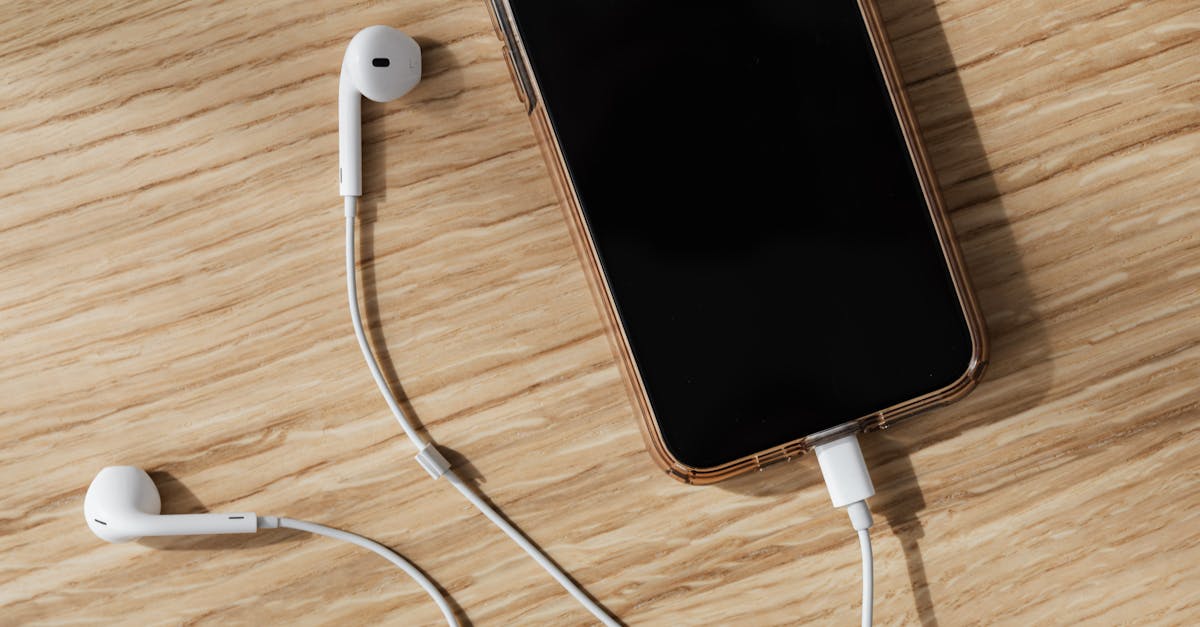
Wireless is the most convenient option, and Bluetooth is a low-power one. Wired headphones emit no radio signal at all, only a very weak low-frequency magnetic field that is generally considered negligible. One caveat: your phone still transmits, so a wire removes only the headset's radio, not the phone's.
Air-tube headsets carry sound to your ear through a hollow tube, so no electronics sit at your head. They are simple, inexpensive, and worth trying if you take long calls. We have not found good independent data on them, so we describe them as a sensible low-tech option rather than a proven one.

Using the three principles
Distance: keep the phone out of your pocket and off your body while you listen. Time: wired or speaker for the long calls, wireless for the short ones. Source strength: strong signal means the phone transmits less, so take long calls where reception is good.
What to do this week
Pick one change. If you take long calls, switch them to speaker or a wired or air-tube headset. If you listen to audio for hours, put the phone in a bag or on a desk instead of a pocket. Keep wireless buds for workouts and short calls, and notice whether you miss anything.
If you like a visual reminder, our stickers are made for phones and personal devices, and we use them as part of a calm routine. They are a lifestyle choice, not a medical product, and distance does the real work.
Optimize your environment. Unlock your potential.