

The Bedroom Audit: How to Set Up Your Sleep Environment in a Wifi-Saturated World
The Bedroom Audit: How to Set Up Your Sleep Environment in a Wifi-Saturated World
Issue 02. By Yarden and Jessica, co-founders of BioHarmonize.
Most people spend seven to nine hours a night in their bedroom. That makes it, by a wide margin, the single most important room in their home when it comes to health. Yet it is also, for many of us, the room we pay the least attention to from an environmental standpoint. We choose the mattress carefully. We might invest in blackout curtains. But we rarely stop to ask: what is actually in the air, and in the fields, around us while we sleep?
That question is what this issue is about. Not to alarm you, but to equip you. A thoughtful bedroom audit takes less than an afternoon, costs very little, and can meaningfully shift the quality of your sleep and recovery. We know, because we have done it ourselves.
Why sleep is when your environment matters most
During sleep, your body shifts into its deepest repair cycles. Growth hormone is secreted, cellular cleanup pathways activate, and the glymphatic system in your brain opens up to flush metabolic waste. These are precisely the hours when your biology is most attuned to its environment, and most sensitive to disruption.
Research from the World Health Organization has long recognized that environmental factors, including electromagnetic fields, light, noise, and temperature, influence sleep architecture. A 2018 review published in the International Journal of Environmental Research and Public Health found measurable associations between residential radiofrequency (RF) exposure and self-reported sleep disturbances. The science is still building, as it always is, but the direction is consistent: the bedroom environment shapes the biology of recovery.
Setting up your sleep space thoughtfully is not about fear. It is about giving your body the cleanest possible conditions to do what it already knows how to do.
The wifi router under the nightstand
We should tell you about Jessica's apartment before we were married.
Jessica is not someone who worries easily. She is practical, analytically trained, and the first to push back when something sounds more like wellness theater than real science. So when Yarden first brought up the topic of RF emissions and sleep, she was skeptical. Politely skeptical, but skeptical.
At the time, she had a wifi router under her nightstand. It had been there for years, placed there because the signal was strongest in that spot. When Yarden visited with a meter, the readings near her pillow were striking. Not alarmingly high by any regulatory standard, but persistently present, all night, every night, directly adjacent to where her head rested.
She moved the router to the hallway. Within a few weeks, she noticed she was falling asleep faster and waking up feeling more rested. She is not given to placebo effects. That experience is part of why we started BioHarmonize together.
The router story is not unusual. In a wifi-saturated world, the nightstand has become one of the most common places people park their highest-output devices. Routers, phones on charge, smart speakers, tablets: all of them emitting RF fields throughout the night, all of them unnecessary in that location.

Starting with distance: the simplest lever
Distance is the most powerful tool you have. RF field strength follows an inverse-square law: double the distance and the exposure drops to roughly one quarter. Moving a device from two feet away to eight feet away reduces exposure by approximately ninety-four percent, with no technology required.
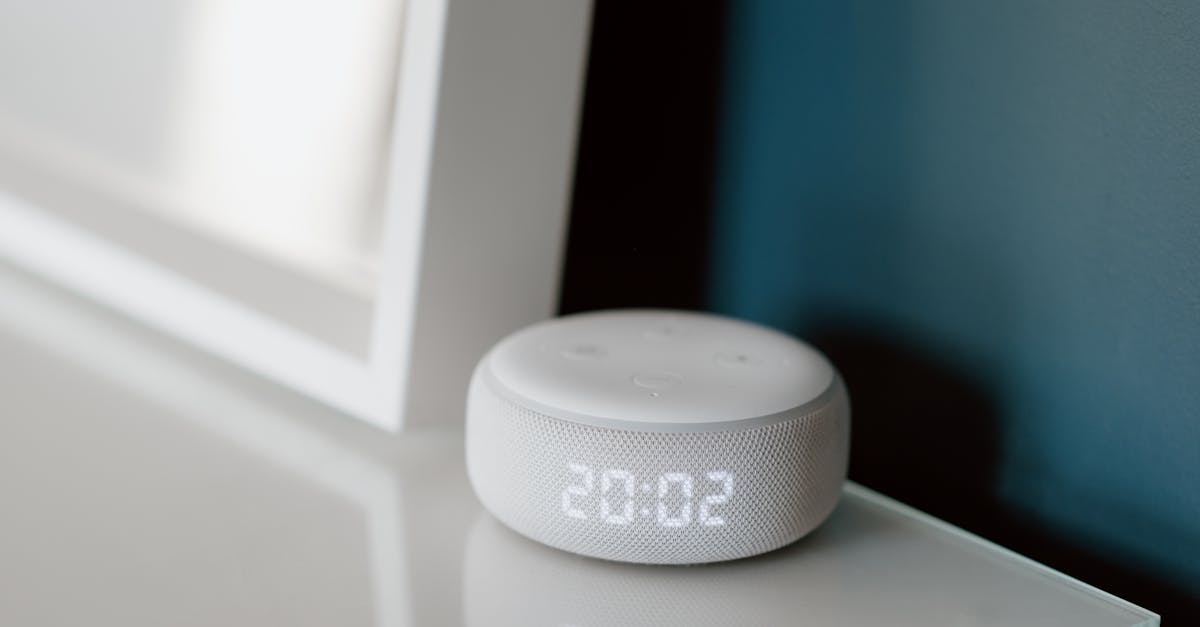
For the bedroom audit, start by mapping where your active devices are relative to where you sleep. Router on the nightstand? Move it to another room, or at least to the other side of the bedroom. Phone charging by your head? Charge it on the dresser across the room, or better yet in the hallway. Smart speaker on the bedside table? Move it or power it down overnight. These are zero-cost changes with immediate effect on your nighttime RF environment.
The FCC sets maximum permissible exposure limits for RF fields, and virtually all consumer devices operate well within them. The audit is not about compliance, it is about optimization. You are not trying to meet a minimum. You are trying to give your biology its best possible conditions.
The smart meter question
Yarden's experience is worth sharing here because it is part of how BioHarmonize began.
Several years ago, Yarden developed persistent tinnitus. The ringing was low-grade but constant, most noticeable in quiet rooms and at night. After consulting with physicians and finding no clear structural cause, he began looking at his environment more carefully. His home had a smart meter on an exterior wall directly adjacent to the bedroom. There were also power lines close to the property. After making a series of changes, including repositioning his sleeping area, adding additional shielding to that wall, and addressing the devices in the room itself, his symptoms gradually improved.
It is an ongoing journey, not a story with a clean ending. But it is the story that put him in the room, years ago, with his uncle Dr. Mony Vital, a quantum technology pioneer in his own right, who had introduced Yarden to the science and its potential from childhood, asking questions about how human biology responds to electromagnetic fields at levels below regulatory thresholds. Those conversations shaped everything that followed.
If you have a smart meter on an exterior wall adjacent to your bedroom, it is worth noting in your audit. The building's electrical panel is another source worth locating. Neither of these is something you can easily remove, but awareness allows you to make informed decisions about your sleeping position within the room.
Grounding, shielding, and the tools that support your biology
Beyond distance and device placement, there are additional layers you can add to your sleep environment.
EMF shielding paint and fabrics are available and have measurable attenuation effects on RF fields. Grounding, sometimes called earthing, connects you to the electrical potential of the earth's surface and has been studied in peer-reviewed literature for its effects on cortisol rhythm, inflammatory markers, and sleep quality. A 2004 study published in the Journal of Alternative and Complementary Medicine found that grounded subjects showed improvements in nighttime cortisol profiles consistent with better regulated sleep cycles.
Our EMF Protection Harmonizer Stickers take a different approach. Rather than blocking fields, they work with your body's bioelectric environment using quantum technology that has been examined in more than fifty double-blind, placebo-controlled studies measuring effects on human biology. The sticker applied to your devices does not eliminate the field. It modulates your biological response to it. The distinction matters, and it reflects the body of quantum science that Dr. Vital first introduced Yarden to from childhood, a foundation that eventually led Yarden to the third-party company whose quantum technology BioHarmonize now uses.
Placed on the devices in your bedroom, including your phone and any remaining smart devices, the stickers work quietly alongside the other steps in your audit.
Light, temperature, and the broader environment
A thorough bedroom audit goes beyond RF fields. Blue-spectrum light from screens and LED sources suppresses melatonin production, with research from Harvard Medical School showing that blue light can suppress melatonin for twice as long as green light. Blackout curtains or a sleep mask address ambient light from outside. Screen-free time in the final hour before bed protects your melatonin signal.
Temperature is the other major variable. Core body temperature drops naturally at sleep onset, and a cooler room (the commonly cited research range is 65 to 68 degrees Fahrenheit) supports that process. Bedding materials that breathe and wick moisture help maintain that environment through the night.
The bedroom audit is holistic. RF field management sits alongside light hygiene and thermal comfort as one pillar of an optimized sleep environment, not an isolated concern.

Pulling it all together: your audit checklist in plain language
A bedroom audit does not require special equipment, though a basic RF meter (widely available for under fifty dollars) will show you in real time what your changes accomplish.
Walk through your bedroom and note every device that is powered on overnight. For each one, ask whether it needs to be in the room at all, and if it does, whether it can be moved further from your sleeping position. Put your phone on airplane mode while it charges, or charge it outside the room entirely. Move your router to another room if your internet provider allows it, or at minimum to the far end of the bedroom. Turn off smart speakers overnight unless you use them as alarms. If you have devices you cannot move, consider our Harmonizer Stickers as an additional layer of support.
Then address light and temperature. Cover or dim any LED indicators. Make the room as dark and cool as is comfortable. Give yourself a week with these changes in place before evaluating.
What to do this week
Move your phone charger out of arm's reach from your pillow. That is it. Place it on the dresser, on the floor across the room, or in the hallway. Charge it on airplane mode if it needs to be in the room. Notice how you feel after seven days. This one change, which costs nothing and takes thirty seconds, is the most direct starting point for a bedroom audit. Everything else builds from there.
What is coming next
Issue 03 will look at the workspace: how to think about your home office or desk setup, where RF exposure from laptops, monitors, and nearby routers tends to concentrate, and how small adjustments to your daily working environment can support focus, energy, and long-term wellbeing. We will also share some of the research behind our EMF Shield Privacy Phone Sleeve and how it performs in real-world testing.
The bedroom is where your body does its most important work. The audit we have described above is not about worry. It is about building the conditions that let your biology perform at its best. Every change is a small act of care for yourself.
The goal is always the same: to help you optimize your environment and unlock your potential.
Yarden and Jessica
Co-founders, BioHarmonize
Frequently Asked Questions
Does moving my router to another room actually make a meaningful difference?
Yes. Because RF field strength drops sharply with distance, moving a router from your nightstand to another room or even to the far side of the bedroom creates a significant reduction in overnight exposure. You do not need measuring equipment to benefit from the change, though a basic meter will confirm the difference in real time.
I use my phone as an alarm. Do I really need to move it out of the bedroom?
You can keep it as an alarm while still reducing your overnight exposure. Charge it on airplane mode (which suspends the RF-emitting cellular, wifi, and Bluetooth radios while leaving the alarm function intact) and place it across the room rather than on the nightstand. A standalone alarm clock is an easy alternative that removes the question entirely.
What is the difference between blocking EMF and what your Harmonizer Stickers do?
Shielding and blocking work by attenuating the field itself, typically using conductive or absorptive materials. The Harmonizer Sticker technology works differently: it is designed to modulate your body's bioelectric response to the field, based on quantum technology studied in over fifty double-blind, placebo-controlled trials. The two approaches address different aspects of the interaction between fields and human biology, and many people use both.
I have a smart meter on the exterior wall of my bedroom. What can I do?
You cannot remove a utility-installed smart meter, but you can create more distance between it and your sleeping position. If your bed is currently against that wall, moving it to a different position in the room is a practical first step. RF-shielding materials applied to that wall are another option. Adding a Harmonizer Sticker to your main electrical panel area can also be part of your approach.
How long before I notice changes after doing a bedroom audit?
Individual experience varies. Jessica noticed changes in her sleep quality within a few weeks of moving her router. Some people report shifts more quickly; others take longer or find the changes more subtle. Sleep quality is influenced by many variables, and the audit addresses one important cluster of them. The most useful approach is to make the changes, give them consistent time, and observe your own patterns.